Let the Bustard Live
A Citizen's Initiative for Rollapadu
Critically Endangered
IUCN Red List Status
<200 Birds
Current population in India
Since 2016
Bustard Recovery Program
About Our Mission
Society for Bustard Recovery Program Rollapadu (SBRPR) is a citizen-led conservation movement working with
communities, scientists, and governments to save the Great Indian Bustard and its fragile grassland ecosystem.
Vision
To secure the survival of the Great Indian Bustard in Rollapadu and restore grasslands for future generations.
Mission
• Conserve habitats through research and advocacy
• Create awareness and inspire action
• Collaborate with global conservation programs
Who We Are
A dedicated team of conservationists, researchers, and local communities united in protecting Andhra Pradesh's only Great Indian Bustard stronghold.
The Great Indian Bustard
India's flagship grassland species
Population Decline
- 1980s:
- 2000s:
- 2010s:
- 2020s:
- ~1,500 birds
- ~600-700 birds
- ~250 birds
- <200 birds
Current Habitats
- Rajasthan (Desert National Park) - 60%+
- Gujarat (Kutch)
- Maharashtra (Nannaj)
- Karnataka (Siriguppa)
- Andhra Pradesh (Rollapadu)
Threats & Challenges
Understanding the critical threats facing the Great Indian Bustard
is essential for effective conservation
Join Our Mission
Every action counts in saving the Great Indian Bustard. Together, we can make a difference.
Volunteer
Join field surveys, awareness campaigns, and community outreach programs
- Field surveys and monitoring
- Educational programs
- Community engagement
Donate
Support eco-guards, awareness programs, and grassland restoration efforts
- Habitat restoration
- Community programs
- Research initiatives
Spread the Word
Share our campaigns on social media and raise awareness in your community
- Social media campaigns
- Community talks
- Educational content
Contact Us
Ready to join our conservation efforts? Get in touch with us today.
Address
Rollapadu, Midthur Mandal
Nandyal District
Andhra Pradesh, India
info@sbrpr.org
conservation@sbrpr.org
Phone
+91 8019295500
Society for Bustard Recovery Program Rollapadu (SBRPR)
The Bird We're Saving
Great Indian Bustard
Ardeotis nigriceps
Critically Endangered
With an extremely small, rapidly declining population, the GIB faces imminent extinction risk.
Historical Range Loss
Once widespread across the Indian subcontinent, now confined to small pockets in the Thar and Deccan grasslands.
Rapid Decline
Population has crashed from thousands to approximately 150 individuals across fragmented habitats.
Current Status
Hope for Recovery: With immediate action on power-line safety and habitat protection, the species can be pulled back from extinction.
Why Rollapadu
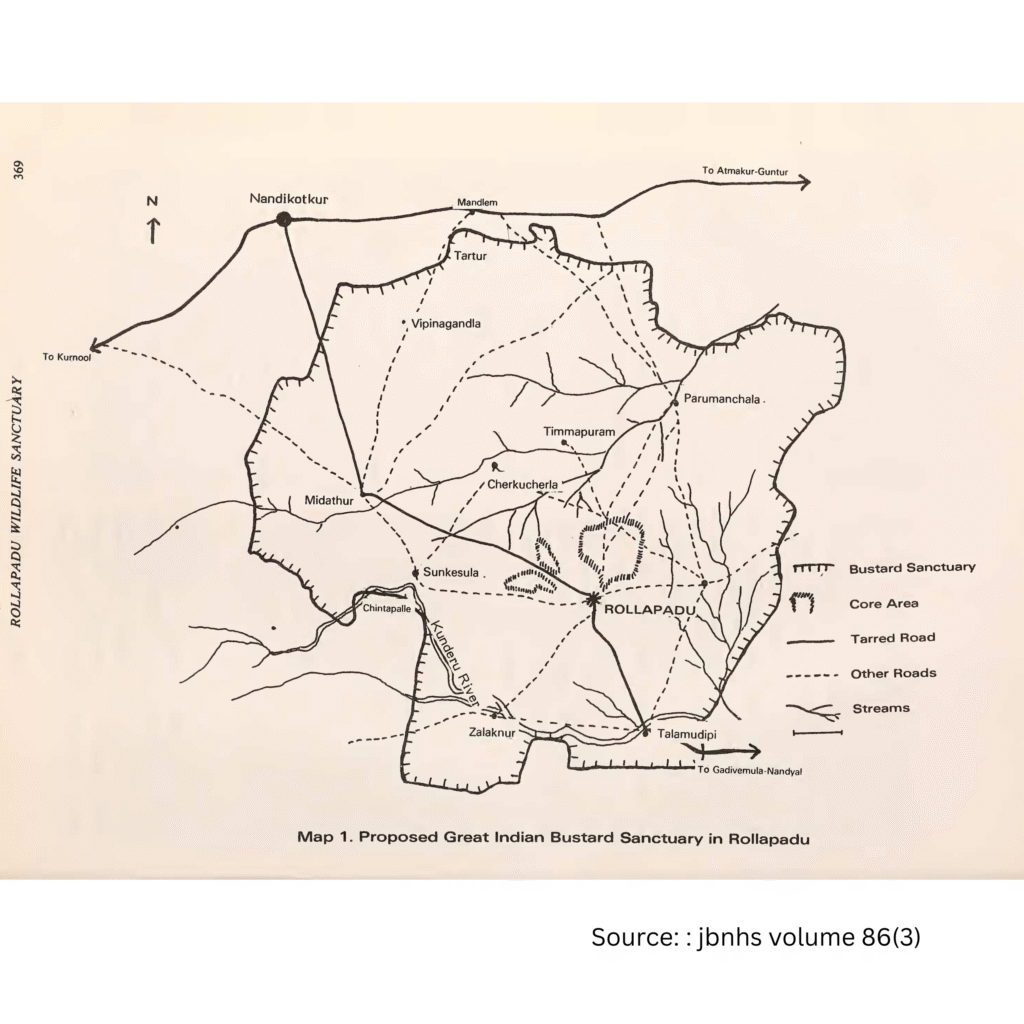
A Sanctuary Built for the Bustard
Rollapadu Wildlife Sanctuary was created specifically to protect the Great Indian Bustard and the precious Deccan grasslands ecosystem. We work closely with the Andhra Pradesh Forest Department and local communities to transform this sanctuary—and the working landscape around it—into a thriving habitat for ground-nesting birds, blackbuck, harriers, and other grassland specialists.
Protected Status
Dedicated wildlife sanctuary with legal protection for GIB habitat
Community Partnership
Working with local communities for sustainable co-existence
Ecosystem Approach
Protecting entire grassland ecosystem and multiple species
Strategic Location
Key habitat in the Deccan grasslands with proven GIB presence in the past
What's Pushing the Species to the Edge
Power-line Collisions
Habitat Loss
Fragmentation
The Power-line Crisis
Transmission lines crossing bustard habitat create invisible death traps. The birds’ poor frontal vision and heavy build make them especially vulnerable to high-speed collisions.
- Limited ability to see and avoid overhead wires
- Heavy birds require long approach for takeoff
- High collision rates documented in multiple studies
Power infrastructure through bustard habitat
Policy Backdrop :
India’s Supreme Court ordered bird-safe power infrastructure in priority GIB areas (diverters immediately; undergrounding where feasible), with scope refined in 2024. Work now focuses on clearly mapped priority zones for maximum conservation impact.
Our Plan: The Rollapadu Model
A comprehensive, science-based approach to bustard recovery that addresses immediate threats while building long-term habitat security.
Step 1
Protection
Protection of the three enclosures within the sanctuary with high fencing. Presently, 10% of fencing is pending.
Step 2
Grasslands:
Common grass species were Aristida funiculata, chrysopogen fulvus, eremopogen fovoelatus in the 1980's. These grasses have to be restored.
Step 3
Translocation
Bring young chicks from Rajasthan, acclamitize them to the harsh wildlife by creating an aviary.
Step 4
Breeding Centre :
For security reasons and virus attacks, a GIB breeding centre shall be established on the lines of Ramdevra.
Step 5
High Tension Power Lines :
Follow SC directions without jeopardising economic development. Instal bird diverters. Paint black colour on the blades of wind turbines.
Step 6
Former involvement :
Mixed cropping pattern, crops friendly to GIB, non use of chemical fertilisers & pesticides, stop future irrigation works, crop subsidy etc.
What Success Looks Like
Key Performance Indicators you can track on this site
Beyond the GIB: India's Other Threatened Bustards
Shared habitats, threats, and solutions mean wins for one species often help the others. Our grassland conservation approach benefits all of India's bustard species.
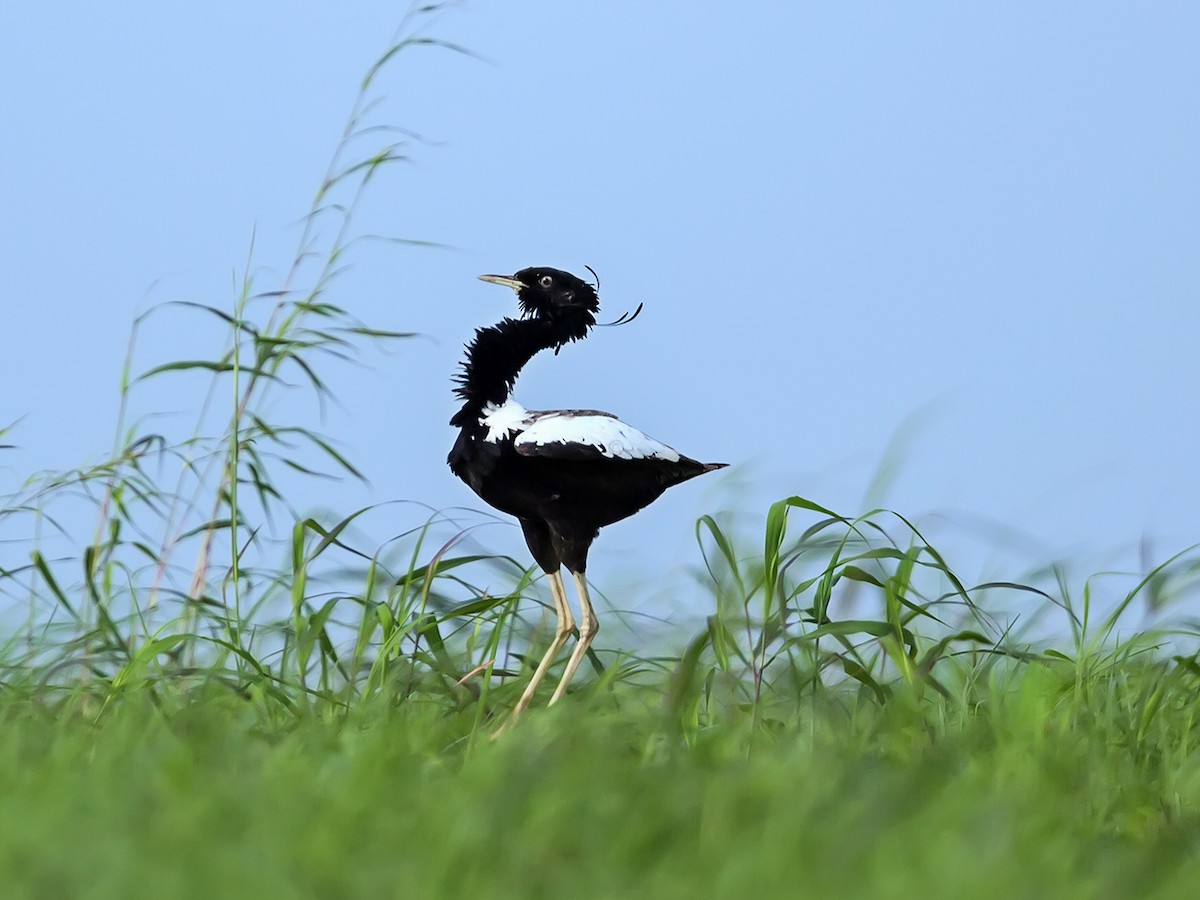
Distribution
Rajasthan, Gujarat, Madhya Pradesh, Maharashtra
Breeding Season
Monsoon months (July-September)
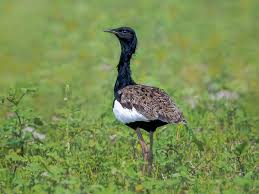
Floodplain Specialist
Unique among bustards for preferring wet grasslands and floodplains
Last Strongholds
Assam (India), Cambodia, Nepal
Population Estimate
Less than 1,500 worldwide
Shared Threats, Shared Solutions
Grassland Policy
Protecting native grasslands benefits all ground-nesting species
Safer Power Grid
Bird-safe infrastructure protects all large flying species
Community Engagement
Local stewardship creates safe havens for multiple species
Resources: Authoritative Open Library
Evidence-based conservation requires access to the best science. Our open library provides
authoritative sources on bustard ecology, threats, and conservation solutions.
Comprehensive status and threats overview from the world’s leading conservation authorities.
Habitat improvement, bird diverters, and breeding programme progress reports from Wildlife Institute of India.
Large multi-species carcass study and Population Viability Analysis for GIB – landmark research on collision impacts.
GIB’s poor frontal vision & energy-infrastructure solutions research from Bombay Natural History Society.